
Pain Management
Pain is one of the most common reasons people come to acupuncture, and one of the areas where the research is strongest. Whether you’re dealing with something acute, like a sports injury or a flare-up, or something that’s been grinding away for months or years, treatment can be tailored to where you are and what you need.
Living with pain changes how you move, how you sleep, how you work, and how you feel. It’s rarely just a physical problem. Stress, fatigue, and mood all get pulled into the picture, and over time the whole system starts compensating. That’s why treating the sore spot alone doesn’t always get lasting results.
My approach looks at the full picture: what’s driving the pain, what’s keeping it there, and what your body needs to start resolving it. Acupuncture is particularly well-suited to this kind of work, and it’s backed by a substantial body of clinical research.
Why Pain Persists
In Chinese Medicine, pain is understood as a disruption in the flow of Qi and Blood through the body. When circulation is blocked or sluggish, tissues don’t get what they need to repair, and pain settles in. The longer it stays, the more the surrounding area adapts around it, creating patterns of tension, stiffness, and compensatory strain that can spread well beyond the original site.
This is why chronic pain can feel so stubborn. The initial injury may have healed, but the pattern it created in the body hasn’t. Tight muscles protect the area, circulation stays restricted, and the nervous system stays on alert. Treatment works by interrupting that cycle: releasing the tension, restoring blood flow, and calming the nervous system so the body can start recovering properly.
Two people with the same diagnosis can have very different underlying patterns in Chinese Medicine. One person’s lower back pain might stem from a cold, tight pattern with restricted circulation. Another’s might involve heat and inflammation. The distinction matters because it changes the treatment approach entirely.
What the Research Shows
Acupuncture for pain is one of the most extensively researched areas in complementary medicine. Large-scale systematic reviews of clinical trials, the gold standard for evaluating treatment effectiveness, have consistently found acupuncture to be effective for several common pain conditions.
A major meta-analysis involving over 20,000 patients across multiple countries found that acupuncture produced clinically meaningful pain relief for chronic back and neck pain, shoulder pain, knee osteoarthritis, and chronic headache, with effects that were sustained over time (Vickers et al, 2018). A follow-up analysis of nearly 18,000 patients confirmed that the benefits of acupuncture generally persisted for at least 12 months after a course of treatment (MacPherson et al, 2017).
For low back pain specifically, an updated Cochrane review found acupuncture to be clinically effective for both pain reduction and functional improvement compared with no treatment (Mu et al, 2020). International clinical guidelines now recommend acupuncture as a treatment option for chronic low back pain, particularly when medication is not preferred.
Migraine and tension-type headache have also shown strong evidence. Systematic reviews have found acupuncture to be more effective than sham acupuncture for migraine prevention, and at least as effective as preventive medication with fewer side effects (Fan et al, 2021).
These are original systematic reviews of randomised controlled trials published in peer-reviewed journals, the level of evidence that underpins clinical practice guidelines worldwide.
What Treatment Looks Like
Treatment always starts with a thorough assessment. I’ll ask about where the pain is, when it started, what makes it better or worse, and how it’s affecting your day-to-day life. I’ll also ask about things that might seem unrelated, like your sleep, your stress levels, and your energy, because these all influence how the body processes and recovers from pain.
Acupuncture is the core of most pain treatment plans. It works by improving local circulation, releasing muscular tension, and modulating the nervous system’s pain response. For acute injuries, treatment focuses on reducing inflammation and encouraging healing. For chronic pain, the focus shifts to breaking the cycle of tension, restricted blood flow, and nervous system sensitisation that keeps pain in place.
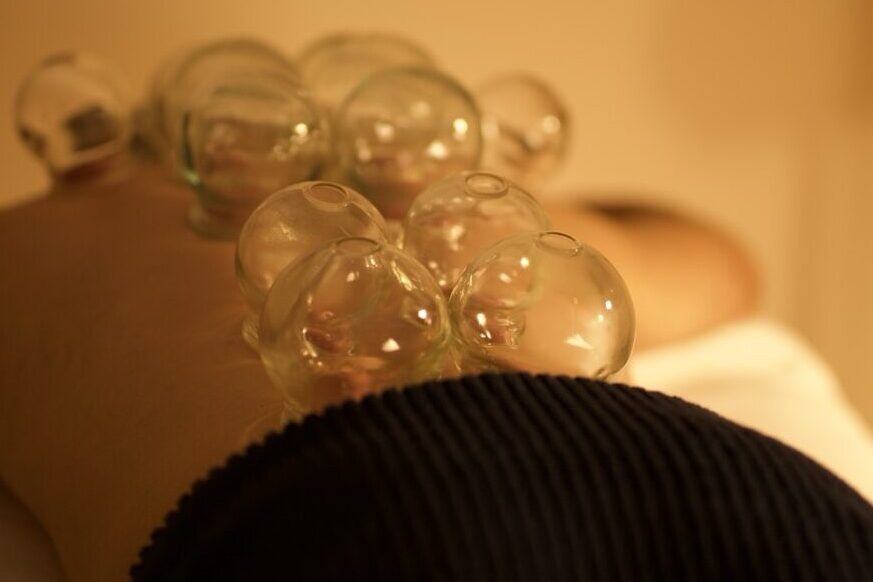
Cupping and gua sha are often used alongside acupuncture for musculoskeletal pain. Both techniques work by drawing blood flow into tight, restricted areas, helping to release adhesions and improve tissue recovery. They’re especially useful for upper back and shoulder tension, muscular stiffness, and recovery after training.
Chinese herbal medicine may be recommended for pain that has an inflammatory or systemic component, or where internal patterns like poor circulation or energy depletion are contributing to slow recovery. Formulas are tailored to your specific pattern and adjusted as things improve.
Where relevant, I may also suggest practical adjustments to movement, posture, or daily habits that support what we’re doing in the treatment room.
Common Pain Concerns
People come to me with all kinds of pain. Some have had it for weeks, others for years. Some know exactly what caused it, others have no clear trigger. All of these are good starting points for treatment.
What commonly brings people in:
- Chronic or recurring lower back pain
- Neck pain and stiffness
- Shoulder tension, frozen shoulder, or rotator cuff issues
- Knee pain and osteoarthritis
- Migraine and tension-type headaches
- Sciatica and referred leg pain
- Sports injuries, strains, and recovery after training
- Repetitive strain and overuse injuries (wrists, elbows, forearms)
- Joint pain and stiffness
- Muscular tightness that doesn’t resolve with stretching or massage alone
If your concern isn’t listed, get in touch. Pain management is an area I work with frequently, and I’m always happy to talk through whether acupuncture could help in your situation.
Part of Your Pain Management Team
Acupuncture works well alongside physiotherapy, osteopathy, chiropractic care, exercise physiology, and medical treatment. Many of my patients are seeing other practitioners for their pain, and acupuncture can complement that care by addressing different aspects of the problem.
If you’re managing pain with medication, acupuncture may help reduce your reliance on it over time, though any changes to medication should always be discussed with your prescribing doctor.
I’m happy to coordinate with your other health professionals so your care feels connected. And if you need referrals, I can point you in the right direction.
Ready to Get on Top of Your Pain?
Whether you’re dealing with a new injury or pain that’s been around for longer than you’d like, acupuncture may offer a path forward. I practice from Zhong Centre in St Kilda, Melbourne.