Mental Health
Life has a way of accumulating. Work pressure, poor sleep, relationship stress, health worries, or just the low hum of being switched on all the time. When that load builds up without a release valve, it starts showing up in the body: tight shoulders, disrupted sleep, a gut that won’t settle, energy that flatlines by mid-afternoon.
In Chinese Medicine, emotional and physical health aren’t treated as separate things. They’re part of the same system. Stress, anxiety, and low mood all have physical signatures, and physical imbalances can drive emotional ones. This connection is central to how I approach treatment.
My clinic is a calm, unhurried space where you can talk openly about what’s going on. There’s no expectation to have it all figured out before you walk in.
How Chinese Medicine Understands Emotional Health

Chinese Medicine has been working with emotional health for thousands of years. Rather than separating the mind from the body, it treats them as deeply interconnected. Each organ system in Chinese Medicine has both a physical and an emotional role, which means persistent stress, anxiety, or low mood are understood as patterns involving the whole body.
For example, ongoing stress often disrupts the smooth flow of Qi through the body. You might notice that as tightness in the chest, tension in the jaw or shoulders, irritability, or a feeling of being stuck. Over time, that disruption can affect sleep, digestion, energy, and hormonal balance.
Treatment works with these patterns to restore flow, calm the nervous system, and help the body find its way back to equilibrium. The aim is to address what’s driving the emotional strain, not just mask the symptoms.
What Treatment Looks Like
Every treatment plan starts with a conversation. I’ll ask about your sleep, your energy, your digestion, your stress levels, and anything else that feels relevant. In Chinese Medicine, these details all connect, and understanding the full picture is what allows me to tailor treatment to you specifically.
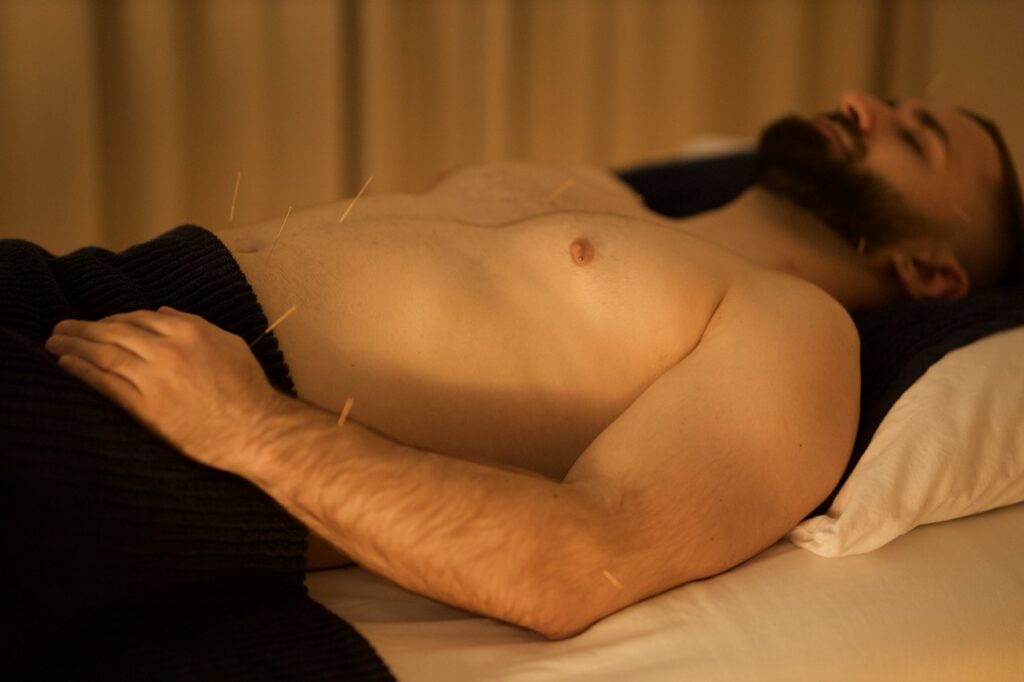
Acupuncture is the foundation of most treatment plans for emotional wellbeing. It works with the nervous system to encourage a shift from “fight or flight” into a calmer, more regulated state. Many people describe their session as the first time they’ve properly switched off in weeks. That deep reset is part of how acupuncture supports mental health over time, not just in the moment.
Chinese herbal medicine can be a valuable addition, providing daily support between acupuncture sessions. Herbal formulas are tailored to your specific pattern, whether that’s calming an overactive mind, building depleted energy, improving sleep quality, or steadying your mood through hormonal shifts.
I may also suggest simple, practical adjustments to your routine: breathing techniques, dietary tweaks, or small changes to how you wind down at the end of the day. Nothing overwhelming, just grounded tools that support what we’re doing in the treatment room.
Common Concerns I Work With
People come to me at all different points. Some are managing ongoing stress or anxiety. Others are going through a difficult period and want support to get through it. Some feel flat or disconnected and can’t pinpoint why. All of these are valid reasons to explore what Chinese Medicine can offer.
What commonly brings people in:
- Stress and feelings of overwhelm
- Feelings of anxiety, restlessness, or racing thoughts
- Low mood or emotional flatness
- Difficulty falling asleep, staying asleep, or waking unrefreshed
- Physical tension linked to stress (jaw clenching, tight shoulders, headaches)
- Emotional changes connected to hormonal shifts, life transitions, or burnout
If what you’re experiencing isn’t listed here, get in touch anyway. Mental and emotional health is one of the areas I work with most, and I’m always happy to talk through whether acupuncture could help.
Part of a Bigger Picture
Acupuncture works well alongside other forms of support. If you’re seeing a psychologist, counsellor, or GP for your mental health, Chinese Medicine can sit alongside that care without conflict. Many of my patients find that acupuncture complements talk therapy or medication by addressing the physical side of emotional strain: the tight body, the disrupted sleep, the nervous system that won’t settle.
I’m always happy to work collaboratively with your other health professionals so your care feels joined up rather than fragmented. And if you’re looking for referrals to psychologists or counsellors, I can point you in the right direction.
Looking for a Space to Reset?
If stress, anxious thoughts, or emotional strain are weighing on you, acupuncture may offer a different kind of support. I currently practise at Zhong Centre in St Kilda, Trans Space in Brunswick and Asthetique Skin Care in Shepparton.